






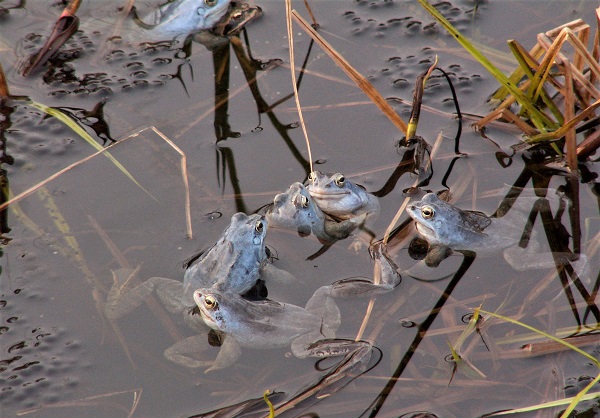
Have you seen the light blue frogs?! If not, then April is the time to go to the woods! Moor frogs spawn in April. Males of moor frogs acquire a light blue / bluish-gray shade during spawning.
Moor frogs are one of the earliest spawning amphibian species. Sometimes there is still ice in one corner of the pond, but the moor frogs are already "boiling" in the opposite direction. Since the common frog also starts to spawn relatively early and the two species can be found together, you should listen carefully to the frog's choir - if it is bubbling like a porridge pot, it is a moor frog, if it is purring like a cat - then the common frogs.
Although the name of the moor frog suggests that this species lives in bogs, it is not. The moor frog can spawn both in small forest water bodies - ditches, ponds, trenches - and in larger water bodies outside the forest.
“The spawning of moor frogs lasts for 2-3 weeks, but then the frogs leave the water body and spend the summer on land. Frogs play a very important role in nature - they feed on insects and other invertebrates, thus regulating their numbers, and also serve as food for many species of birds and mammals. The presence of frogs also indicates about the quality of the environment,” explains Mārtiņš Kalniņš, an environmental expert at JSC Latvia’s State Forests.
If you have managed to see or take pictures of moor frogs or record their voice, do not have a message only to yourself! Share it on Dabasdati.lv, iNaturalist or in another nature diary!